Bleeding
Reviewed by licensed engineers
Checked against its sources by licensed professional engineers on the previous site, where reviewers weren’t recorded by name.
On this page · 4 sections
Description
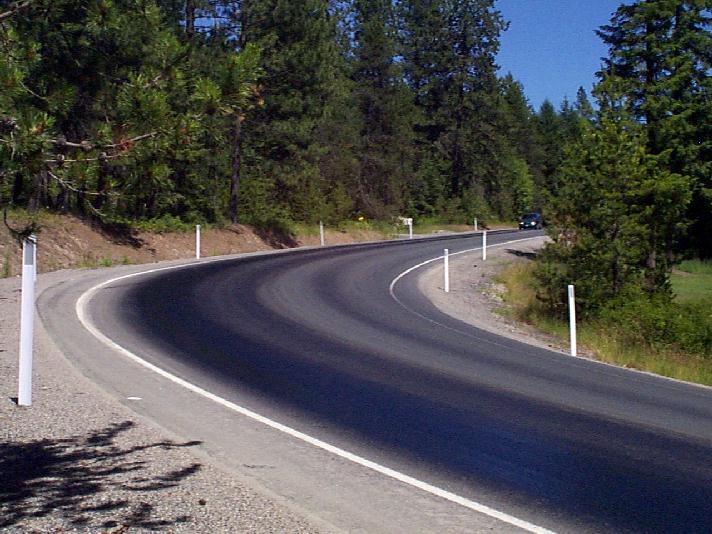
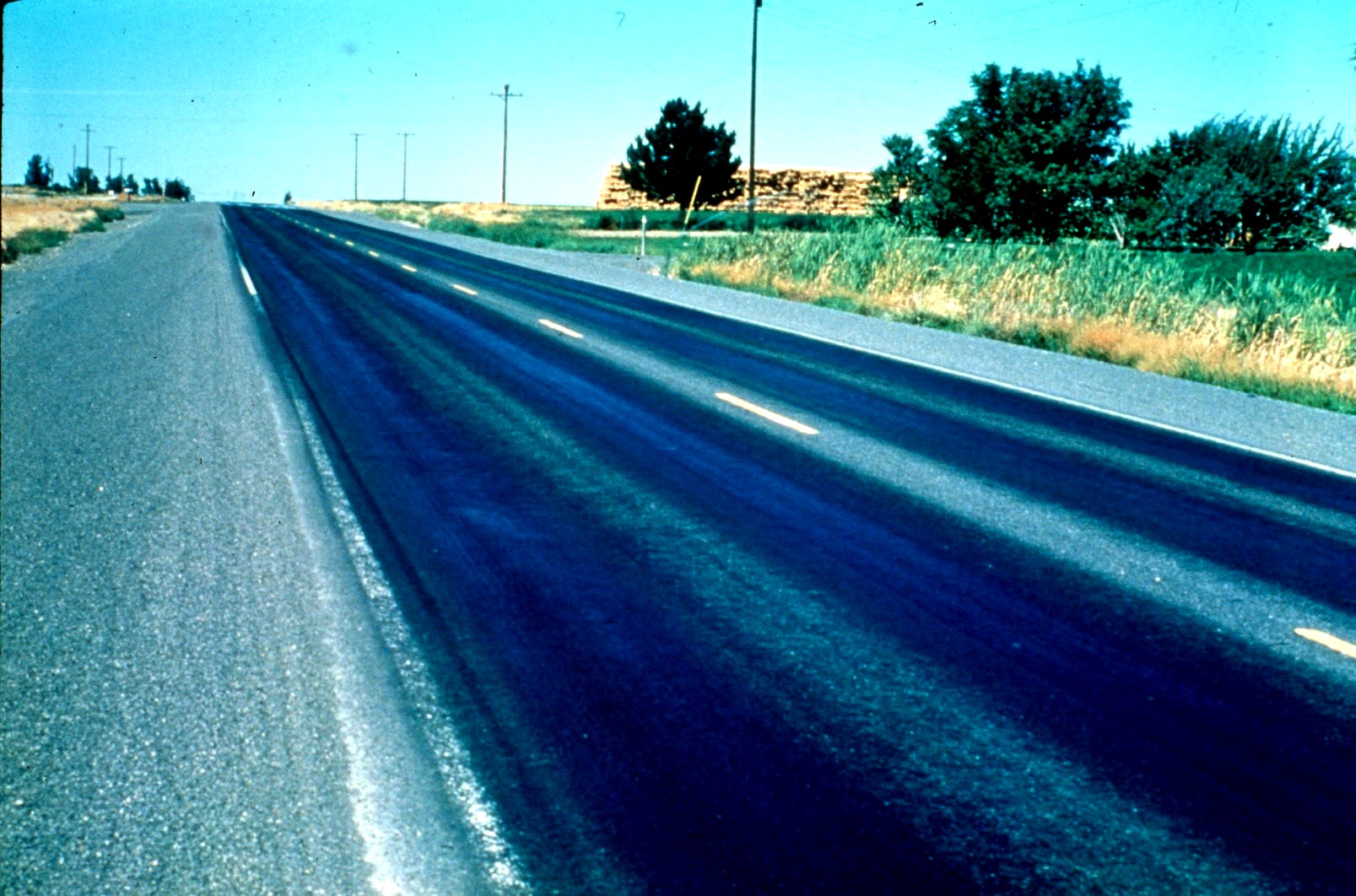
A film of asphalt binder on the pavement surface. It usually creates a shiny, glass-like reflecting surface (as in the first photo) that can become quite sticky. Sometimes referred to as "flushing".

Problem
Loss of skid resistance when wet
Possible Causes
Bleeding occurs when asphalt binder fills the aggregate voids during hot weather and then expands onto the pavement surface. Since bleeding is not reversible during cold weather, asphalt binder will accumulate on the pavement surface over time. This can be caused by one or a combination of the following:
- Excessive asphalt binder in the HMA (either due to mix design or manufacturing)
- Excessive application of asphalt binder during BST application (as in the above figures)
- Low HMA air void content (e.g., not enough room for the asphalt to expand into during hot weather)
Repair
The following repair measures may eliminate or reduce the asphalt binder film on the pavement's surface but may not correct the underlying problem that caused the bleeding:
- Minor bleeding can often be corrected by applying coarse sand to blot up the excess asphalt binder.
- Major bleeding can be corrected by cutting off excess asphalt with a motor grader or removing it with a heater planer. If the resulting surface is excessively rough, resurfacing may be necessary (APAI, no date given).
Teaching this? Figures and worked examples are free to use with credit. How to cite
Cite this page
APA
Pavement Interactive. (2018, September 10). Bleeding. HeadLight. Retrieved [the date you read it], from https://pavementinteractive.org/reference-desk/pavement-management/pavement-distresses/bleeding/
ASCE
Pavement Interactive. (2018). “Bleeding.” HeadLight, <https://pavementinteractive.org/reference-desk/pavement-management/pavement-distresses/bleeding/> ([the date you read it]).
BibTeX
@misc{pavint-bleeding,
  author = {{Pavement Interactive}},
  title = {Bleeding},
  year = {2018},
  publisher = {HeadLight},
  howpublished = {\url{https://pavementinteractive.org/reference-desk/pavement-management/pavement-distresses/bleeding/}},
  note = {Accessed [date]}
}